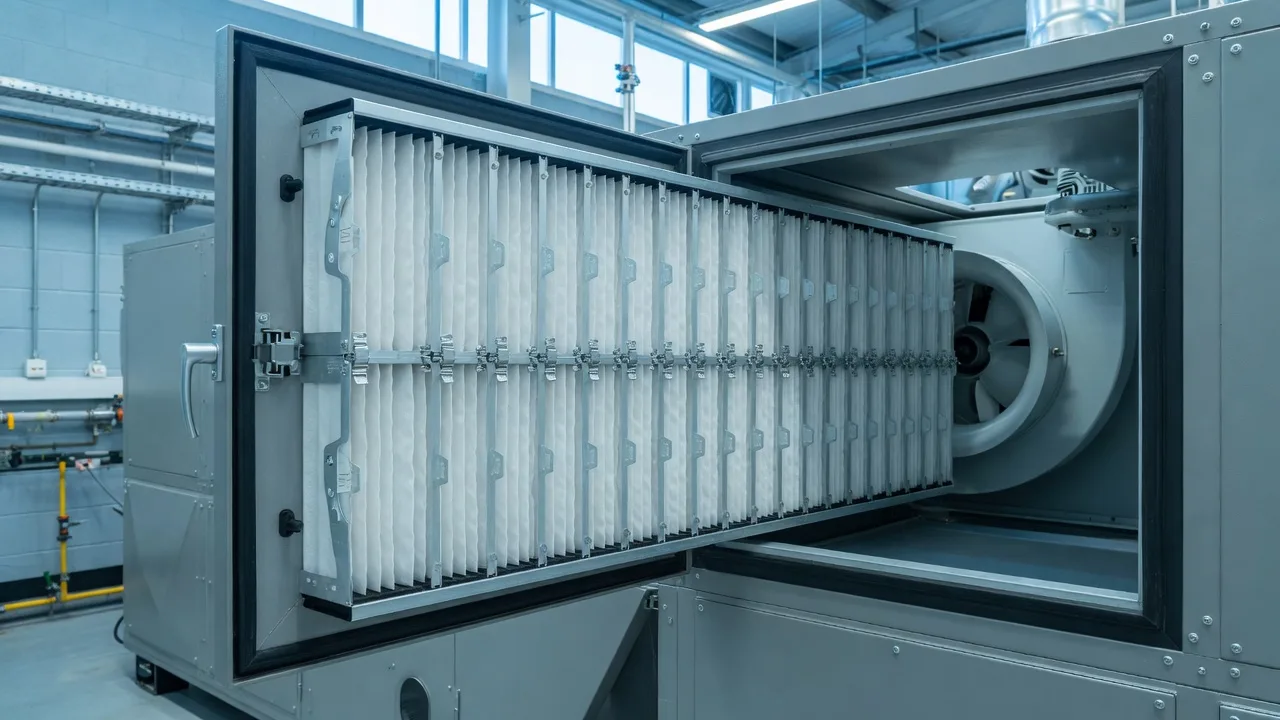
When the National Physical Laboratory needed the ventilation systems in its recently renovated facilities cleaned to laboratory standards, the turnaround was two weeks and the previous contractor had already fallen short in testing. We were hired to deliver near-perfect cleanliness first time.
Background
The National Physical Laboratory (NPL) is the UK’s National Measurement Institute. Its measurement standards underpin new generations of antibiotics, quantum communications, cancer treatments and tools to tackle climate change. Its headquarters at Bushy Park, Teddington, hold some of the country’s most extensive laboratories, and even a sapling grown from the pips of Isaac Newton’s apple tree, flown into orbit with astronaut Tim Peake.
When it comes to accuracy, the NPL is world class. Scientists have long understood that reliable standards of measurement are the foundation of transformative technology, and the NPL exists to set and safeguard those standards for the UK. Even the Newton sapling, presented to the laboratory in 2020, says something about the site: this is a campus where precision is the point, in the research and in the buildings that house it.
We were tasked with completely cleaning the supply and extraction air ventilation systems and all the air handling units across the NPL’s recently renovated facilities. The brief was demanding: the turnaround time was two weeks, and the contractor engaged before us had fallen short in testing. There was no margin for a second attempt.
That pressure shaped how we planned the job. A failed verification would have cost the NPL time it did not have, so every stage of the clean was set up to pass independent testing at the first attempt rather than relying on a re-clean to close the gap.
Why laboratory ventilation cleaning is different
Ventilation hygiene in a laboratory environment is not the same job as cleaning the ductwork in an office block. Research facilities depend on controlled conditions, and the supply and extraction systems that maintain those conditions have to be verifiably clean, not just visibly clean. Dust, debris and microbial contamination inside ductwork and air handling units are recirculated into the spaces the system serves, which is exactly what a precision environment cannot tolerate.
That is why cleans of this kind are specified, tested and certificated rather than simply carried out. The standard demanded of the finished system is measurable, and an independent test decides whether the work has passed. If your facility operates cleanrooms or controlled laboratory spaces, the same logic applies to you: the clean is only as good as the verification behind it.
What we did
Our hygiene cleaning operatives are trained to clean pharmaceutical laboratory environments and complex cleanrooms to BESA TR19 and HTM03 standards.
- Installed access doors throughout the ductwork and fan units, in line with TR19 recommendations, so the full system could be reached.
- Removed dirt, dust and microbial contamination from the air handling units and ducted system using specialist equipment.
- Carried out a detailed post-clean analysis, presented in a written and photographic report.
- Issued an independently verified, TR19-approved certificate confirming the entire system had been cleaned to European specification.
Access was the first problem to solve. Ductwork cannot be cleaned to a verifiable standard if sections of it cannot be reached, so the first stage of the work was fitting access doors throughout the ductwork and fan units at the points TR19 recommends. That preparation is unglamorous, but it is the difference between a system that is genuinely clean end to end and one that has only been cleaned where it was convenient.
The cleaning itself covered both the supply and extraction sides of the system, along with every air handling unit, so no contaminated section was left to reseed the ductwork downstream once the plant was running again.
Working to BESA TR19 and HTM03
BESA TR19 is the industry specification for the internal cleanliness of ventilation systems. It sets out how systems should be accessed, how they should be cleaned, and how cleanliness should be measured and verified afterwards. HTM03 covers the specialised ventilation requirements of healthcare and similarly controlled environments. Together they gave the NPL an objective benchmark: not our opinion that the system was clean, but test results showing it.
Working to TR19 also means the paperwork stands up afterwards. The written and photographic report and the TR19-approved certificate we issued give a facilities team documented evidence of the standard achieved, which matters when the building is audited or when the next hygiene inspection falls due.
Outcome
By committing a large, experienced team to the project, we completed the full ventilation system clean in ten days, ahead of the two-week target the NPL had set under a tight deadline.
The independently verified certificate confirmed the clean had met the specification, with no need for the second attempt the programme could not afford. The NPL got its recently renovated facilities signed off inside the deadline, with documented proof that the ventilation serving them met the standard its laboratories required.
What this means for your facility
Most ventilation systems stay out of sight and out of mind until a test, an audit or a failed inspection forces the issue. If yours has never been cleaned to a verifiable standard, or a previous contractor has left you without the certification to prove it, this project shows how quickly that can be put right when the team is large enough and trained for the environment.
A ductwork camera survey is a sensible first step if you do not know what condition your system is in. From there we can scope the clean, install any access the system is missing and certificate the result to TR19.
If your laboratory, cleanroom or commercial building needs its ventilation systems surveyed and cleaned to BESA TR19, arrange a survey with our team.